
Walk into any specialty coffee shop and you will likely see a roasting date stamped on the bag. This is not a marketing gimmick. It is a window into the chemistry of your cup. Understanding why freshly roasted coffee tastes so much better than stale beans requires a brief journey into the science of roasting, degassing, and oxidation.
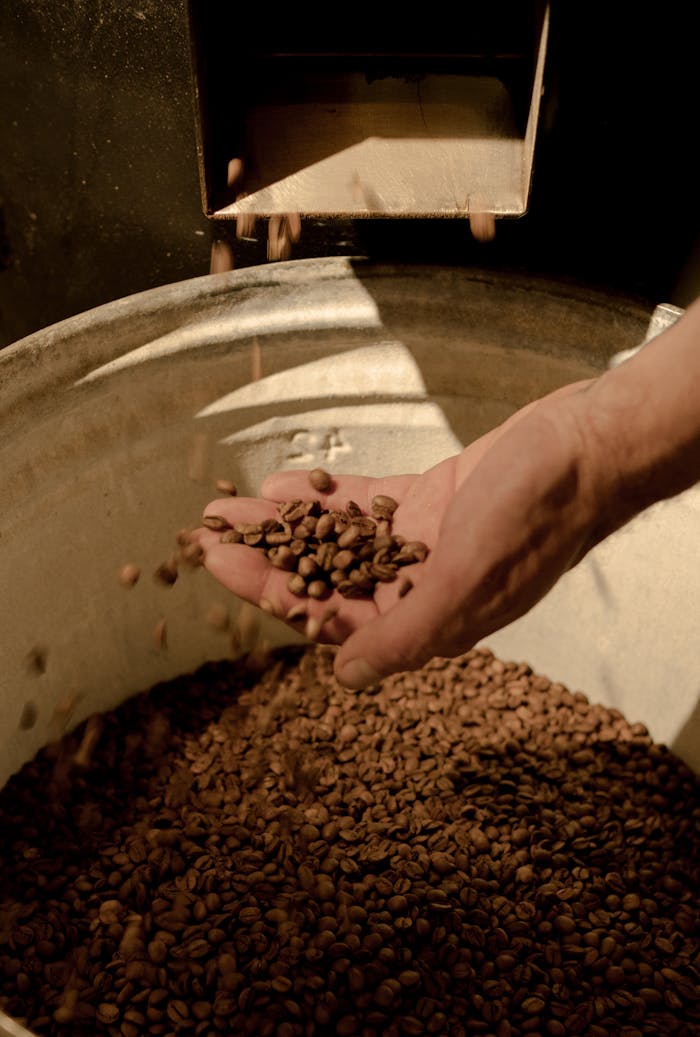
When green coffee beans are roasted, they undergo a dramatic transformation. Heat triggers hundreds of chemical reactions inside the bean. Sugars caramelize. Proteins break down through the Maillard reaction. Chlorogenic acids degrade into aromatic compounds. Carbon dioxide, water vapor, and volatile aromatic molecules are produced in enormous quantities. The bean swells, cracks, and changes color as all of this chemistry unfolds in a matter of minutes.
What emerges from the roaster is not just a darkened bean. It is a compressed package of complex flavors and aromas held together by the bean’s cellular structure, with carbon dioxide acting as a kind of preservative. This CO2, trapped inside the cells of the bean, is crucial to freshness. It creates a slightly pressurized environment that slows the entry of oxygen, the primary enemy of coffee flavor.
The moment coffee is roasted, a countdown begins. For the first 24 to 72 hours, the beans are actually too fresh to brew. They are still off-gassing CO2 at a rapid rate, which will interfere with extraction and produce a hollow, bubbly, underdeveloped cup. After this initial degassing phase, however, the coffee enters what many roasters call its peak window: typically between three and fourteen days after roasting.
During this peak window, the volatile aromatic compounds that give coffee its character are fully accessible. Fruity esters, floral terpenes, chocolatey pyrazines, and spicy phenols are all present in their most vivid form. These are the molecules that hit your nose when you grind fresh beans and make the first sip taste alive, layered, and satisfying.
Contrast this with coffee that was roasted months ago. The CO2 has fully dissipated. Without this protective layer, oxygen has had free access to the beans. Through a process called oxidation, the aromatic compounds that give specialty coffee its character break down into simpler, less flavorful molecules. Fats in the bean go rancid. Moisture is absorbed from the environment. The result is a flat, stale, often bitter cup that bears little resemblance to what was possible at peak freshness.
The science makes a compelling case that roasting date matters enormously. But there is more to it than just the date on the bag. The type of roast, the packaging, and the storage conditions all influence how long coffee stays in its prime. Light roasts, which retain more moisture and have denser cell structures, tend to hold their flavors longer than dark roasts, which are more porous and oxidize more quickly. Nitrogen-flushed bags with one-way valves, which allow CO2 to escape while keeping oxygen out, can extend the freshness window significantly.
Understanding this science changes how you shop for coffee. Instead of looking for a best-by date far in the future, you start looking for a roast date close to today. Instead of buying the largest bag possible to save money, you buy smaller quantities more frequently. Instead of keeping your beans on the counter for display, you store them in an airtight container away from light and heat.
The best coffee roasters in the world obsess over this chemistry. They track CO2 release curves, experiment with resting periods, and build delivery systems designed to get beans to customers within days of roasting. The reason is simple: all of their skill, sourcing, and craft is only fully realized in a cup made with genuinely fresh beans. Everything else is a pale imitation.
Freshness is not a luxury in specialty coffee. It is the foundation on which everything else is built. Once you taste the difference between beans roasted three days ago and beans roasted three months ago, you will never look at a bag of coffee the same way again.