
There is a certain type of coffee drinker who approaches their morning cup not as a caffeine delivery mechanism but as one of the genuinely meaningful rituals of the day. They have considered their grinder. They have a kettle with a thermometer. They buy beans from roasters who print the roasting date on the bag, and they notice when a coffee is five days out of the roaster versus fifteen. They can describe the difference between a washed Ethiopian and a natural Colombian by taste alone. For this person, TM Enigma was built.
The name Enigma is apt. A great cup of coffee is, in a sense, a puzzle — a complex system of variables that, when they align correctly, produce something that is more than the sum of its parts. The origin of the bean, the conditions of the growing season, the processing decisions made at the farm, the roaster’s profile, the brewer’s technique, the quality of the water, the freshness of the grounds: all of these contribute to the final result in ways that interact with each other in non-obvious ways. TM Enigma celebrates this complexity rather than trying to reduce it.
The coffees that carry the Enigma name are selected specifically for their complexity and layering. These are not approachable, unchallenging coffees designed to be universally liked. They are coffees that reward attention, that reveal different things at different temperatures as the cup cools, that taste different as a pour over than as an espresso, that change character subtly from one week post-roast to three weeks post-roast. They are, in short, coffees for people who enjoy thinking about what they are drinking and finding something new in each cup.
This does not mean they are difficult to enjoy for a less experienced drinker — great complexity and great accessibility are not mutually exclusive, and the best specialty coffees manage to be both at once. But TM Enigma is designed with the engaged drinker in mind, and its selection criteria reflect this. Beans are typically single-origin, allowing the terroir of the growing region to express itself fully. Processing methods that produce fruit-forward or complexity-adding results, such as natural or honey processing, feature prominently. Varietals with genetic complexity, such as Ethiopian heirlooms or Bourbon cultivars, are prioritized over more neutral, high-yield commercial varieties.
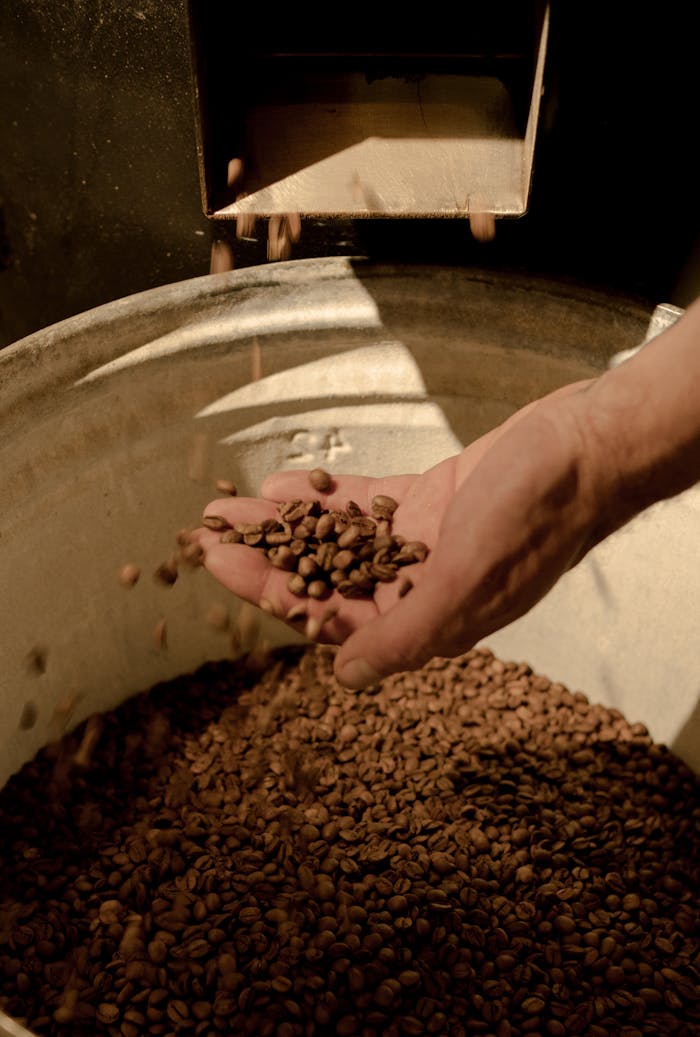
The roasting philosophy for Enigma coffees is notably lighter than for many specialty brands, and deliberately so. A lighter roast development preserves more of the volatile aromatic compounds produced during fermentation and drying at origin — the molecules that create the distinctive blueberry notes in a natural-processed Yirgacheffe, the jasmine florals in a washed Kenyan, or the blackcurrant brightness in a Guatemalan from a high-altitude farm. These notes are destroyed by over-roasting. The roasting team at TM Enigma is willing to accept a narrower flavor margin and a shorter shelf-stable window in exchange for the fuller expression of origin character that lighter development allows.
The practical implications for the buyer are worth understanding. Enigma coffees typically benefit from a longer resting period post-roast than medium or dark roast coffees. Three to five days of rest after roasting allows the initial intense off-gassing to subside and the aromatic compounds to settle into their most expressive state. The first cup from a newly opened Enigma bag may be slightly more aggressive and less resolved than the cup brewed from the same bag a week later. This is not a defect; it is part of how these coffees work.
For espresso use, Enigma coffees generally require more precise dialing-in than more forgiving medium roasts. Their inherent acidity and aromatic intensity can produce overpowering results if the extraction is even slightly off. But for the home barista who enjoys the challenge, a dialed-in shot of a great Enigma single origin is one of the finest experiences the home coffee setup can produce.
TM Enigma is a brand within a brand: a statement about what specialty coffee can be when its complexity is protected at every stage, from selection through roasting to delivery.