
There is a reason that wine bottles are sealed with corks, that olive oil comes in dark glass bottles, and that specialty coffee bags have one-way valves. Oxygen, while essential to human life, is the relentless enemy of flavor. In coffee, the process of oxidation is the single greatest threat to the quality of what ends up in your cup — and understanding how it works is the first step toward fighting it effectively.
Oxidation is a chemical reaction in which molecules lose electrons upon contact with oxygen. In coffee, this reaction targets the volatile aromatic compounds that give the bean its character: the esters that create fruity notes, the aldehydes that contribute floral aromas, the pyrazines responsible for nutty and chocolatey flavors, and the phenols that add spice and depth. These compounds are relatively large, complex molecules that form during roasting through a cascade of chemical reactions. When oxygen attacks them, it breaks them down into simpler, smaller molecules with less aromatic intensity and less pleasant flavor.
The results are familiar to anyone who has ever brewed a pot of coffee from beans that have been sitting in an open container on the kitchen counter for a few weeks. The bright, complex aroma disappears first. What replaces it is a flat, cardboard-like smell with faint bitter undertones. The cup itself follows the same trajectory: thin, hollow, overly bitter, and lacking the sweetness and clarity that make great coffee worth seeking out.
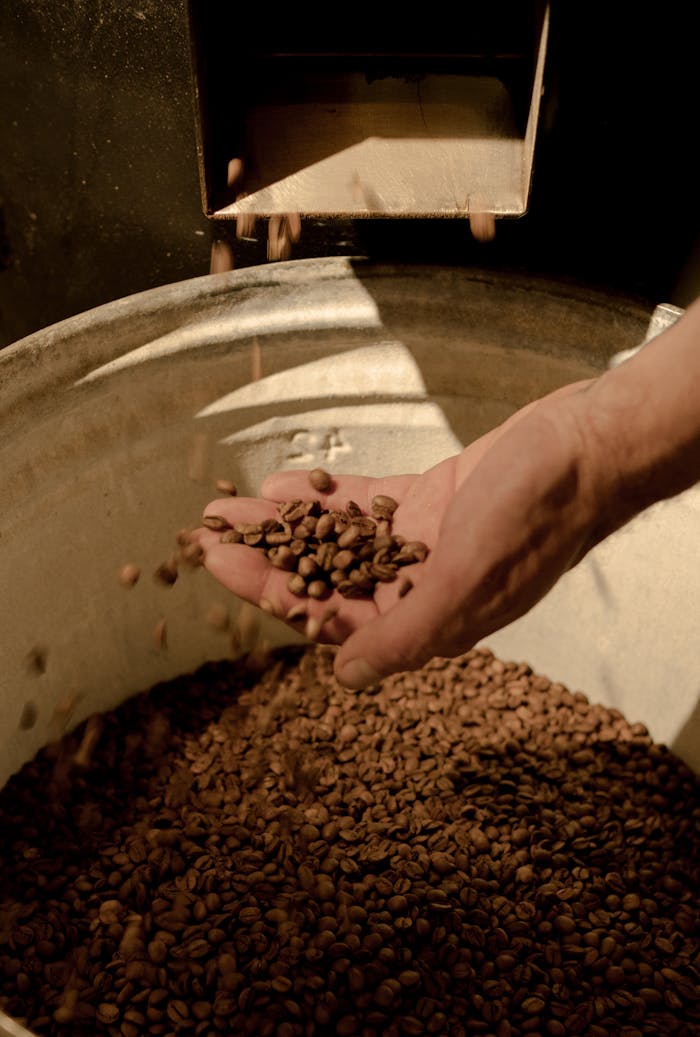
Freshly roasted coffee has a natural defense against oxidation that is worth understanding. When beans exit the roaster, they are saturated with carbon dioxide, a byproduct of the Maillard reactions and caramelization that occurred during roasting. This CO2 fills the pores and cells of the bean, creating a slightly pressurized internal environment. For the first several days after roasting, the beans are actually off-gassing this CO2 at a rapid rate. During this window, the CO2 escaping from the bean acts as a physical barrier, pushing oxygen away from the bean’s surface and slowing oxidation.
This is why freshly roasted coffee brewed too soon, within the first 24 to 48 hours of roasting, often tastes underdeveloped and gassy. There is so much CO2 escaping from the grounds during brewing that it interferes with proper extraction. Experienced baristas and home brewers refer to this as the bloom: the bubbling expansion you see when hot water first contacts fresh grounds. A vigorous bloom is a sign of fresh coffee. A flat bloom is a sign of stale coffee that has lost most of its CO2.
Once the initial off-gassing phase subsides, typically after two to four days for most roast levels, the CO2 begins to provide less protection. This is when proper packaging becomes critical. The best specialty coffee bags include both a one-way degassing valve, which lets remaining CO2 escape without letting oxygen in, and a nitrogen flush, which replaces the oxygen inside the bag with inert nitrogen at the time of sealing. Together, these technologies dramatically slow the rate of oxidation.
Grinding dramatically accelerates oxidation. A whole bean has a relatively small surface area compared to its volume. When ground, the bean is shattered into thousands of tiny particles, each with its own exposed surface. The total surface area exposed to oxygen increases by a factor of roughly one hundred compared to the whole bean. This is why ground coffee goes stale in hours or days rather than weeks. It is not an exaggeration: coffee ground at nine in the morning and left in an open container will be noticeably stale by afternoon.
For the home coffee enthusiast, the practical implications of oxidation chemistry are clear. Buy whole beans, not pre-ground. Buy small quantities frequently rather than large quantities infrequently. Store beans in an airtight container away from light, heat, and moisture. Grind only as much as you need immediately before brewing. Choose roasters who ship quickly and package thoughtfully.
Fresh roasting is not just about taste preference. It is about delivering beans to you while the natural chemical defenses built up during roasting are still intact, before oxidation has had time to dismantle the hundreds of aromatic compounds that make specialty coffee worth drinking in the first place. The science is clear, and it is on the side of freshness.