
Every cup of subscription coffee represents the end point of a journey that began long before the bag arrived on your doorstep. Understanding that journey — from the farm where the coffee plant grew, through the complex logistics of green coffee trade and roasting, to the packaging and shipping that brings it to you — gives you a deeper appreciation for what you are holding in your hands and why the decisions made at each stage matter so much.
The journey begins at altitude. The best specialty coffee is grown at elevations between 1,200 and 2,200 meters above sea level, where cooler temperatures slow the maturation of the coffee cherry, allowing more complex sugars and acids to develop in the seed — the coffee bean — inside. At these elevations, the coffee plant produces lower yields than at lower altitudes, which means higher cost per bean but significantly more nuanced flavor. The farmers who grow this coffee are often working small lots of land in remote highland regions, and their livelihood depends on selling what is essentially an agricultural luxury product to buyers who can reach global markets.
The harvest timing and method depend on the origin. In Ethiopia, the world’s birthplace of Arabica coffee, most coffee is still harvested by hand as the cherries ripen, typically between October and January. In Brazil, which produces enormous quantities of coffee and relies more heavily on machinery, cherries may be strip-harvested all at once. Hand-picking and selective harvesting tend to produce more uniform ripeness, which matters for processing and flavor quality.
After harvest, the cherries are processed to remove the fruit and dry the beans. The three main processing methods — washed, natural, and honey — each produce different flavor characteristics. Washed coffee removes the fruit pulp immediately and results in a clean, bright cup with clear origin expression. Natural-processed coffee dries whole with the fruit intact, producing heavier body and fruity fermentation notes. Honey processing is a middle ground, with varying amounts of fruit mucilage left on the bean during drying.
Once processed and dried to a stable moisture level, the beans are sorted, graded, and bagged for export as green coffee — the raw, unroasted beans that can be stored for months at appropriate moisture and temperature without degrading significantly. Green coffee brokers, trading companies, and direct-relationship buyers then purchase lots and arrange shipping. Specialty coffee imported through direct trade relationships — where the roaster works directly with farmers or cooperatives — typically commands higher prices that flow back to the origin, improving farmer incomes and incentivizing quality.
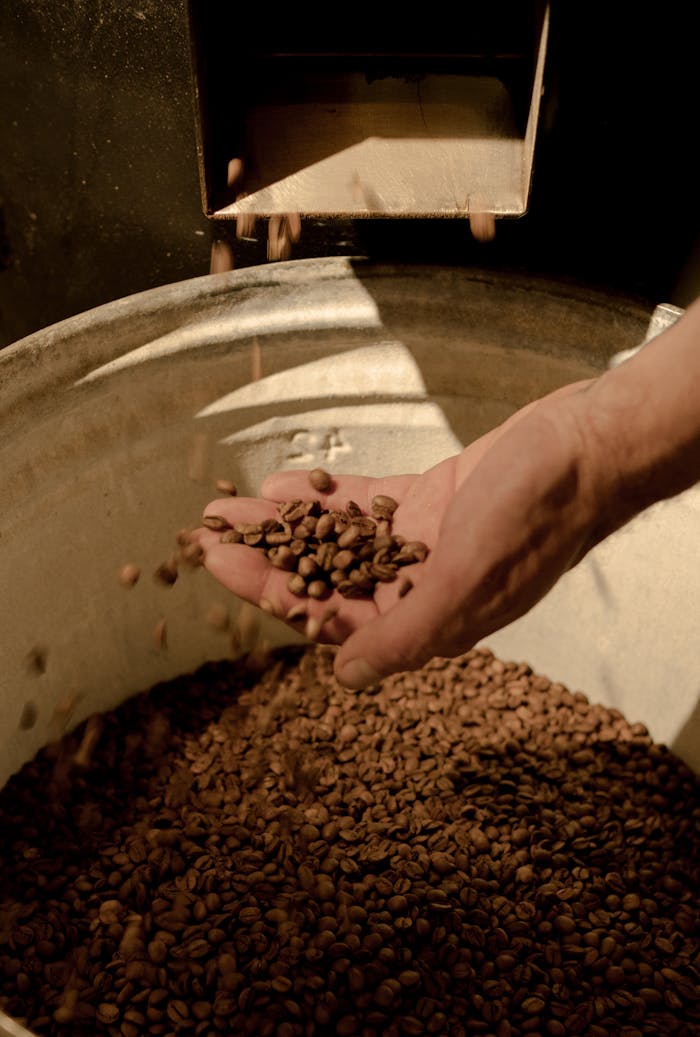
The green coffee arrives at the roaster’s facility, often having traveled by sea container across an ocean and by truck from the port. It is stored in a cool, dry warehouse before use. The roaster’s team cups samples to assess quality and plan roast profiles. When a lot is ready for production, it is roasted in batches sized for the subscription demand.
The time between roasting and shipping is where subscription services most directly differentiate themselves. The best services roast to order: the beans are not roasted until a customer’s order is placed or a shipping date arrives. This means the coffee in your subscription bag may have been roasted as recently as one or two days before it was packed and handed to a courier. By the time it reaches your door, it is three to five days off the roast — right at the beginning of its peak window.
When you tear open that bag and inhale the fragrance of fresh coffee, you are smelling the culmination of months of agricultural work, careful processing, skilled roasting, and logistical precision, all aligned to put the best possible version of this bean in your hands at the best possible moment. That context does not make the coffee taste differently, but it makes the experience of drinking it more meaningful.