
One of the most common distinctions you will encounter in specialty coffee is the difference between single-origin and blended coffees. This distinction shapes how roasters talk about their products, how retailers present their selections, and how coffee enthusiasts develop their preferences. Understanding what it means in practice — not just as a category label but as an experience in your cup — helps you make more informed choices about what to buy and why.
A single-origin coffee, as the name suggests, comes from one specific place. This might mean a single country, a single region within a country, a single cooperative, or even a single farm or a single lot from a single farm. The more specific the origin information, the more it tells you about what shaped the coffee’s flavor. A coffee labeled Ethiopian Yirgacheffe conveys a great deal: it tells you the country, the zone, the tradition, the likely flavor profile. A coffee labeled Suke Quto Natural, Guji Zone, Ethiopia tells you even more: the specific estate, the processing method, and the growing region within a growing region.
The appeal of single-origin coffee lies in its terroir — a term borrowed from wine that refers to the combination of geographic, climatic, and biological factors that give a product its distinctive character. Coffee from a high-altitude farm in Ethiopia tastes like what it is: the product of specific soil chemistry, specific elevation, a specific Arabica varietal, and specific weather patterns during the growing and harvesting season. When this coffee is roasted to express rather than override these characteristics, you get a cup that is a direct expression of place and practice. It is traceable, specific, and distinctive.
For enthusiasts who are curious about the diversity of coffee, single-origins are the most direct path to understanding how much the origin shapes the cup. Brewing a Colombian washed coffee next to a Kenyan natural-processed coffee next to a Guatemalan honey-processed coffee is a rapid education in how growing conditions, varietals, and processing methods translate into flavor.
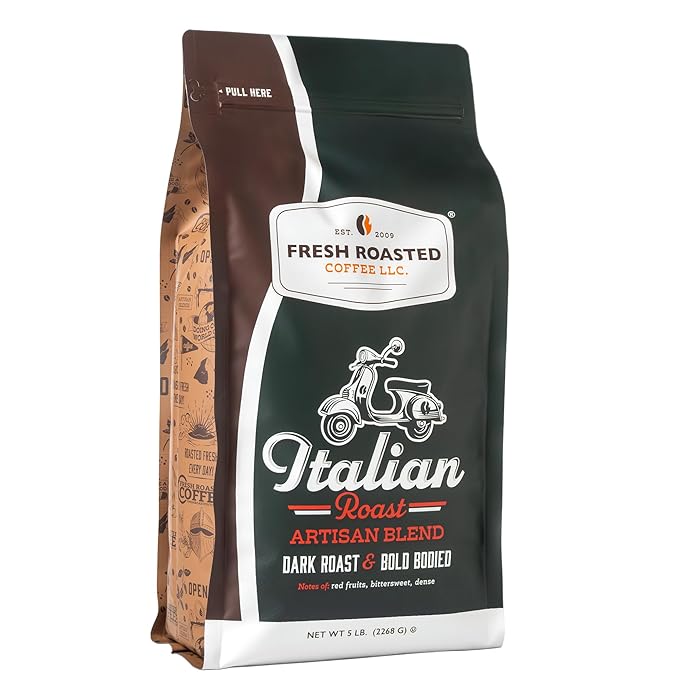
Blends, on the other hand, are created by combining two or more single-origin coffees to achieve a specific, consistent flavor profile. The art of blending is the art of using complementary coffees to produce a result greater than any of them individually. A roaster might combine a Brazilian coffee, which provides body, sweetness, and nutty notes with low acidity, with an Ethiopian coffee that brings brightness and complexity, and a Colombian that contributes balance and smooth chocolate notes. The result is a blend that has more dimensional balance than any one of the three components alone.
The great practical advantage of blends is consistency. Single-origin coffees change from harvest to harvest: a coffee from a specific farm may be extraordinary in one year and merely good in the next, depending on rainfall, temperature, and dozens of other agricultural variables. Blends can be reformulated each season to maintain a consistent flavor profile even as the components change. This is why espresso blends, which are particularly sensitive to the extraction behavior of their components, have historically dominated commercial coffee: the predictability they offer is operationally valuable.
Blends also offer forgiving versatility. Because they are designed with balance in mind, blends tend to work well across multiple brewing methods and are typically pleasant both black and with milk. Single-origins, particularly lighter-roasted ones, can be polarizing: their distinctive characteristics are also distinctly acquired tastes, and their behavior in espresso or with milk may be surprising to people expecting the familiar notes of a blend.
The choice between single-origin and blend is not a question of which is better but of what you value in a coffee experience. If you value origin transparency, flavor discovery, and the sense of drinking something with a specific story and character, single-origins are compelling. If you value consistency, versatility, and the easy pleasure of a well-balanced cup without surprises, blends are the more practical choice. Many coffee drinkers find they want both at different times: a single-origin for the weekend morning when they have time to attend to its complexity, and a reliable blend for the weekday cup that needs to be good quickly and without thought.